How to Serve Caviar
There are so many fun ways to serve caviar beyond a classic caviar service. Discover the best ways to serve caviar here.

Caviar is everywhere these days. Years ago, you could only find caviar in Michelin-starred or Russian restaurants. Today, caviar is everywhere, from chicken nuggets at the US Open to caviar bumps at martini bars. While eating caviar at restaurants is a decadent experience, it’s more cost-effective to serve caviar at home. If you’re wondering how to serve caviar at home, don’t worry. This article will explain the most popular ways to serve sturgeon caviar. Other types of fish eggs are called roe, and you can learn more about the differences in our guide to the types of caviar. New to the world of caviar? Read our ultimate guide to caviar for everything else you need to know.
In This Article
- Traditional Caviar Service
- Caviar Bump
- Potato Chips and Caviar
- Baked Potato and Caviar
- Seafood and Caviar
- Eggs and Caviar
- Cooking With Caviar
- Should Caviar Be Served Cold?
- How Much Is a Serving of Caviar?
How to Serve Caviar
While there are many ways to serve caviar, storing caviar is easy. The best caviar companies send their caviar overnight with ice packs. There should be a freshness pack included that is green when cold and red when warm. Check the color to ensure the shipment stays cold the entire time. Once you receive it, you must keep your caviar cold. Place it in the coldest part of your refrigerator, usually in the back (not in the door). You can even put it atop an ice pack to keep it extra cold. Be sure to check the expiration date before you put it in the refrigerator.
When it’s time to serve the caviar, take it out of the refrigerator five to 10 minutes before you serve it so it has time to warm up a little bit. If the caviar is too cold, you won’t be able to taste all of its flavors. Then, place the tin on a bed of pebbled or crushed ice in your caviar server, or decant the caviar into a glass bowl. Always serve caviar with a mother-of-pearl spoon or another non-reactive material like horn, wood, or plastic. Metal spoons can add a metallic flavor to the caviar if left in the tin. (The metal used in caviar tins is non-reactive.)
If you’re using caviar as a topping, having two caviar spoons is a good idea. That way, your guests can scoop the caviar from the tin with one spoon and place it on their food or hand with the other, and the caviar spoon won’t end up covered in other food. It’s not elegant to have clumps of crème fraîche in the caviar tin.
Traditional Caviar Service

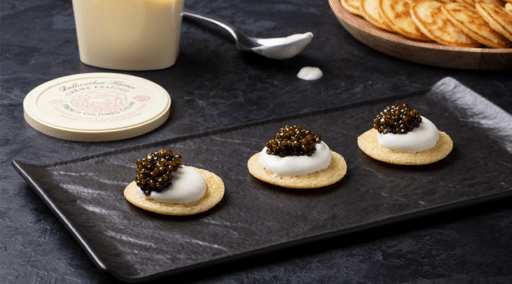
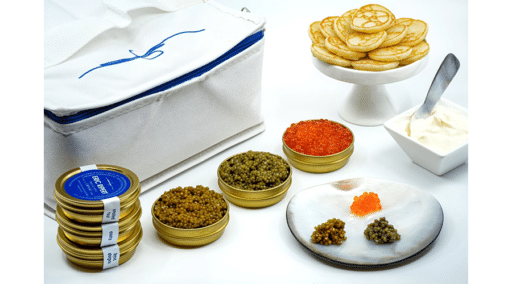
The most traditional way to serve caviar is called a caviar service. This opulent presentation includes caviar on a bed of crushed ice accompanied by fresh blinis, crème fraîche, and toppings, including chopped hard-boiled eggs, chives, capers, diced red onion, and sometimes lemon wedges. Blinis are small pancakes, sometimes called Russian pancakes. You can also substitute mini crêpes or toast points for blinis if you prefer. Crème fraîche is similar to sour cream but has a more mild flavor. I recommend separating the chopped egg yolks and whites for a prettier presentation.
While a classic caviar service is always stylish, many people today prefer a more pared-down version, featuring just blinis and crème fraîche. This is because the other accouterments, especially red onion, overpower caviar’s delicate flavor. Since caviar is so expensive, masking the taste with these toppings doesn’t make financial sense. You can see how to make a caviar blini here. However, if you love a full caviar service with all the toppings, enjoy!
Caviar Bump

My favorite way to eat high-quality caviar, like beluga caviar, is a caviar bump. Doing a caviar bump lets you enjoy the pure flavors of the caviar, and it’s absolutely delicious. It’s the best way to compare different types of caviar, as well. To do a caviar bump, scoop a small amount of caviar from the tin and place it on the top of your hand between your thumb and index finger. Let it sit there for 20 to 30 seconds so your skin warms the caviar, releasing more flavor. Then, lick the caviar off your hand and crush the eggs on the roof of your mouth. Savor the delicate flavors then swallow. Check out our video on how to do a caviar bump to learn more.
Potato Chips and Caviar

A playful and modern way to serve caviar is atop a potato chip instead of a blini. Simply add a swipe of crème fraîche, then top with black caviar or roe. The type of chip you use is important. You want a large, thick chip with lots of salt. Ruffles is my favorite brand for serving potato chips and caviar. Cape Cod chips are too small, Lays and similar styles are too thin, and even fancy potato chips like Torre aren’t as good as classic Ruffles. You can also serve crispy smashed potatoes, tater tots, hash browns, baked potato slices, or rösti if you aren’t a fan of chips.
Baked Potato and Caviar

One of the most decadent ways to serve caviar is atop a baked potato. Caviar Kaspia popularized this style in Paris. Celebrities’ and socialites’ Instagram feeds are filled with images of the potato, which has a starting price of $95, during fashion week. It’s easy to make at home by serving a classic baked potato with caviar, but it’s even more delicious if you follow Caviar Kaspia’s recipe for a twice-baked potato. First, bake the potato. Then, cut off the top of the potato and remove the interior while keeping the skin intact. Mix the scooped-out potato with sour cream, chives, salt, and pepper. (You can substitute the sour cream for olive oil if desired.) Place the mixture into the potato skin and put it back in the oven for five minutes. Remove from the oven, top with a large scoop of caviar, and serve with a mother-of-pearl spoon and more sour cream or crème fraîche.
Seafood and Caviar

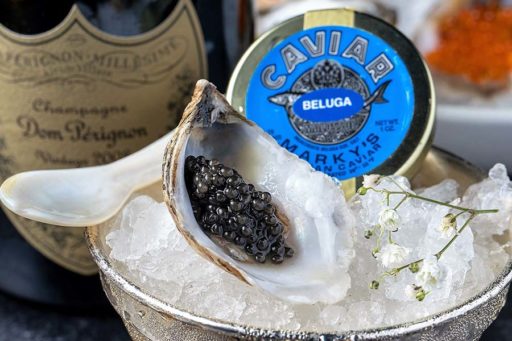
As you might expect, caviar pairs spectacularly well with seafood. You can include caviar with any raw bar offerings; it makes an indulgent addition to a seafood tower. Oysters and caviar are wonderful together. Add a small amount of caviar to an oyster on the half shell, tip it back into your mouth, and savor the briny combination. You can learn more about how to eat oysters here. Caviar is an excellent topping for lobster rolls, smoked salmon, seared scallops, crudos, tartares, carpaccios, and crab cakes.
Eggs and Caviar

Caviar for breakfast? Why not! Caviar is a delicious accompaniment for scrambled eggs and omelets. Slowly cook scrambled eggs with crème fraîche over low heat, then top with caviar and chives, if desired. You can also top omelets with caviar or even put the caviar inside the omelet. Make it a simple omelet; cheese or too many fillings would overpower the caviar. These dishes also make easy dinners with buttered toast or hashbrowns and a mixed-green salad.
Deviled eggs are also wonderful with caviar. Make classic deviled eggs and top each with a small scoop of caviar, or let guests add the caviar themselves.
Cooking With Caviar

I don’t recommend cooking with caviar as a main ingredient; consider it a topping. It adds an elevated touch to fish, potato, and pasta dishes. Just look for recipes with a simple, cream-based sauce. Lemon is also wonderful with caviar. Pasta al limone is a wonderful dish that is easy to make at home.
Unique Caviar Pairings

In the past few years, caviar has become very popular and has made its way onto menus across the country in unusual dishes. In New York City, Coqodaq serves caviar and roe on the most delicious chicken nuggets you’ve ever tried, dubbed the Golden Nugget. They’re perfect with a glass of crisp Champagne. Island Creek Oysters in Duxbury, Massachusetts, made waves with hot dogs topped with white sturgeon roe. Serving a caviar dog will certainly make your summer parties memorable. I’ve also seen caviar on vanilla ice cream, mozzarella sticks, pizza, nachos, bagels, martinis, and desserts. Some of these unique caviar pairings are perhaps for the shock value, but if you ever have a lot of caviar on hand, those are fun ways to enjoy it.
Should Caviar Be Served Cold?

Yes, caviar should be served cold, but not ice cold. If caviar is ice-cold, the flavors will be muted. This is one reason caviar bumps are a popular way of serving caviar; the warmth of your skin will release some of the flavors in the caviar.
So, how should you serve caviar at the proper temperature? Remove it from the fridge five to 10 minutes before serving to let it warm up slightly, then put it on the ice. If it gets too cold during service, take it off the ice and place it on the counter for a few minutes.
How Much Is a Serving of Caviar?

Most people can eat 30g or 50g of caviar in a serving, but serving sizes vary depending on which dish you are serving and what other types of food are available. Caviar is a rich delicacy, so a little goes a long way. If you’re unsure how much caviar to order, buying multiple smaller tins instead of one large one is a good idea. It might look glamorous to have 500g or a kilogram of caviar for special occasions, but once opened, caviar must be eaten within a few days. On the other hand, unopened caviar will last for weeks in your refrigerator; just check the expiration date. It’s better to have two 250g tins instead of one 500g tin if you’re unsure how much caviar your guests will eat. Storing caviar for another occasion is better than being forced to eat it immediately.
The price of a serving of caviar varies greatly depending on the type of caviar. A more affordable caviar costs around $50 for 30g, while premium caviars can cost $200 or more for 30g.