How to Store Wine
Where should you store your wine? Our guide will tell you everything you need to know, whether you have a few bottles you’ll be drinking in the near future or hundreds of bottles for long-term investing.
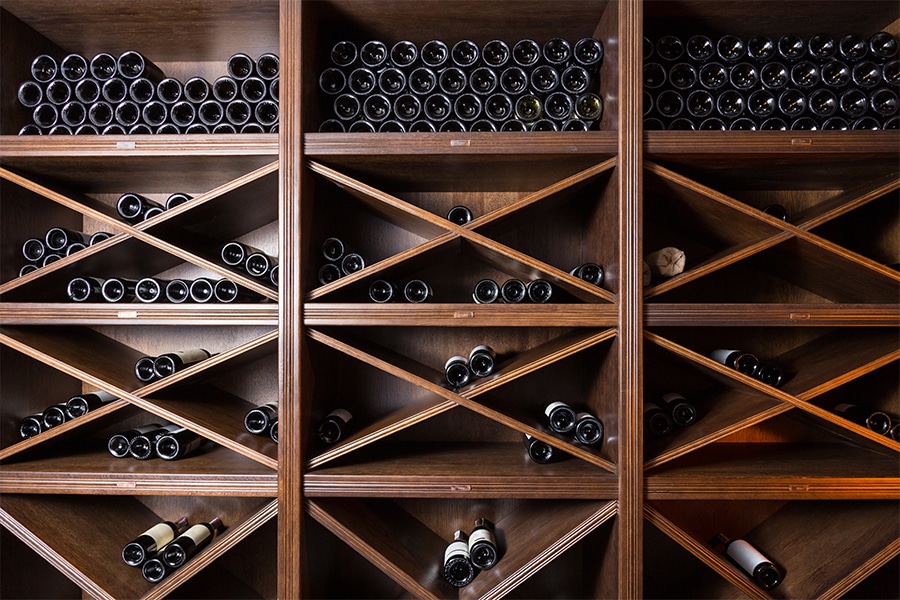
There are two different types of wine storage: short-term storage and long-term storage.
Short-term wine storage is much easier than long-term wine storage, as wine bottles naturally protect the liquid inside them. Long-term wine storage requires more consideration, and usually, an entirely separate space, where the wine can safely mature under optimal conditions.
Optimal wine storage conditions include a cool, dry, dark space devoid of UV rays (sunlight) and pungent odors. You should store the wine on its side to keep the cork moist and have some sort of management system for keeping inventory of your wine.
The amount of time you store wine depends on the type of wine you enjoy drinking, and how often you drink wine. If you’re buying a bottle with the intention of drinking it within a year, you can likely keep it on a wine rack or in a wine fridge. Some wines, however, benefit from prolonged bottle aging after release, such as robust red wines like Bordeaux blends, sparkling wines like Champagne, and sweet wines like Sauternes.
Whether you’re looking to build a large cellar or seeking to build an intimate collection of age-worthy wines, here are six key factors to keep your wine fresh.
How to Store Wine
Temperature

The ideal storage temperature for both red wines and white wines is a consistent average of 55°F. You should keep wine in short-term storage between 45°F and 65°F, but stay as close to the optimal temperature of 55°F for wine in long-term storage.
Wines are most affected by daily temperature fluctuations that remain below 50°F or above 70°F. If you store a wine at temperatures below 50°F, the cork will dry out, which will break the seal, permit more oxygen exchange, and spoil the wine more quickly. When a wine is stored above 70°F, a wine can age too quickly; the wine will present unenjoyable cooked fruit flavors, which is often why a wine that’s gone off is simply referred to as “cooked.”
Don’t store wine in the kitchen because the temperature fluctuates due to cooking. The worst place to store wine is above your refrigerator because it gives off quite a bit of heat.
Humidity
Once you’ve found a consistently cool spot to store your wine, you’ll need to make sure the humidity is also optimal: around 70% to 75% humidity. Similar to the temperature, humidity levels can affect the aging process of wine: low humidity mimics the effects of too-cold temperatures, drying out the cork and ruining the seal. High humidity can also affect the cork as it causes mold to grow. In addition to speeding up oxidation, thus spoiling the wine, mold is a health risk.
Darkness

There’s a reason why red wines like Napa Valley Cabernet Sauvignon are encased in opaque glass bottles; this dark shade is a natural layer of protection to keep the wine away from light during short-term exposure. For long-term storage, store wine in a dark area. The light affects wine in two ways: first, it warms the wine over its ideal storage temperature. Secondly, ultraviolet, or UV, rays can cause a chemical reaction between the acids in the wines, creating a byproduct of sulfur that is not palatable.
Position

You’ll want to keep the majority of wines stored on a slight incline on their side. This maintains the wine’s contact with the cork, and a moist cork is a healthy cork. If a cork becomes dried out, it shrivels and breaks the seal between the wine and the air, quickly oxidizing the wine (read: bad). Even in short-term wine storage, the cork should remain moist to avoid it becoming crumbly, which makes it difficult to open, and a broken cork or bits of cork in the wine doesn’t bode well for an attractive presentation when hosting guests.
Champagne and sparkling wines are the exception to the rule. According to the Union des Maisons de Champagne, after Champagne is disgorged, the bottle doesn’t need to be stored on its side because “the pressure inside the bottle will keep the cork moist and the seal intact.” If you’re planning on creating a wine room for friends and family to enjoy, keeping a few bottles of Champagne on display can add a festive element to the space (so long as the cellar is still dark in between visits).
Odors

As previously discussed, the cork is the main seal between the wine and the environment it ages in. The cork is permeable and can therefore absorb pungent smells, whether it’s gasoline, cleaning supplies, or mold (so don’t store your wine in the garage, pantry near bleach, or a damp corner).
Luckily, this doesn’t require too much technical measurement; if you notice a strong, unpleasant odor in the room or area where you’re storing your bottles of wine, you’ll know to adapt accordingly.
Stay Organized
Once you start collecting wine, the bottles can add up quickly; the more bottles you have, the more challenging it is to know where every bottle is. Even if you don’t think you’re going to start collecting bottles by the hundreds, let alone thousands, you should maintain an inventory from the beginning.
An inventory system can be as simple as a spreadsheet organized by vintage or region (or both!) or more technical by using an application like InVintory or VinoCell.
Wine Cave vs. Wine Fridge?

After reading through the specificities of storing wine, you may be asking yourself, “Should I invest in a wine fridge?” The answer depends on the type of wine drinker you are. Wine cellars, also called wine caves, are considerable investments that liken the dark, cool, and dry environments of subterranean wine cellars carved beneath wineries. If you have the space for this type of storage, then it is worth it to keep your wine aging in the best conditions possible. Underground caves or wine cellars offer a consistent and optimal temperature for both short- and long-term wine storage.
Wine racks are useful for short-term storage if you’re planning on consuming a newly purchased bottle within a few months and place the rack in a cool, dark place. Wine fridges are optimal for somewhere in between. If you have a compact collection, you can set a wine fridge to mimic the settings of a wine cellar, thus storing wine safely for up to a year. Of course, the length of time will vary depending on the type of wine fridge. A high-quality wine fridge should not be opaque, and it should be outfitted with adjustable temperature and humidity settings so you can properly store red and white wines. You don’t want to use a food refrigerator for storing wine for long periods of time; it’s too cold, which can affect the flavor of the wine and damage the cork.
How to Store Wine After Opening?

A bottle of wine will begin to deteriorate as soon as its seal is broken, i.e. once the cork is removed or the screw top is opened. While wines that mature for prolonged periods of time can benefit from oxidation (hence the importance of decanting old wines) there is a delicate balance between giving it too much breathing time. Most wine experts will advise you to consume wine within three to five days of opening. The wine will be more likely to remain drinkable up to that five-day mark if you keep it in the refrigerator between pours — both red and white wines. Check out our complete guide to how to store opened wine for more tips.